








What is early breast cancer?
Early breast cancer means the cancer has not spread to distant parts of the body.1
It may include cancers found in the breast or nearby lymph nodes, such as ductal carcinoma in situ (DCIS) and certain stage I, II, and some stage III breast cancers.1,2
What does stage mean?
The stage of breast cancer describes how much cancer is in the body and how far it has spread.2
Staging is based on test results such as imaging (e.g., mammogram, breast ultrasound) and findings from biopsy or pathology reports.2 Some patients may also have tests such as Ki-67, Breast Cancer gene, or genomic assays to better understand their cancer.3,4
In general, a lower stage means the cancer may be smaller in size, with fewer nodal involvement or limited to nearby lymph nodes. Your stage helps doctors decide the best care for you.2
Can Breast Cancer Come Back After Treatment?
Yes. Breast cancer can come back after treatment. This is called recurrence.5
This can happen when cancer cells remain in the body after treatment and later begin to grow again.5,6
Learning about recurrence is not meant to cause fear. It helps explain why follow-up care remains important even after treatment ends.5,7,8
What are the types of recurrence?

Local Recurrence
When cancer comes back in the same area5

Regional Recurrence
When cancer returns in nearby lymph nodes5
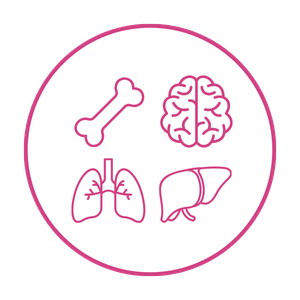
Distant Recurrence
When cancer has spread to other parts of the body such as the bones, lungs, liver, or brain5
Recurrence can happen even after appropriate treatment, as cancer can behave differently from person to person.6
Understanding Your Test Results
After breast cancer is diagnosed, tumor tissue is commonly tested for biomarkers such as Estrogen Receptor (ER), Progesterone Receptor (PR), and Human Epidermal Growth Factor Receptor 2 (HER2).3
These results help your doctor understand how the cancer may behave, choose the right treatment, and plan your follow-up care.2,3
Pathology reports can feel overwhelming at first. If any terms or results are unclear, it is okay to ask your healthcare provider to explain what they mean for you and your care plan.7,3
- Estrogen receptor (ER) and Progesterone receptor (PR) show whether hormones may help the cancer grow.3
- Human epidermal growth factor receptor 2 (HER2) is a protein that affects how breast cells grow; some cancers may grow faster when HER2 is elevated.3
What Is My Risk of Breast Cancer Coming Back?
The risk of recurrence is different from the factors that increase the chance of developing breast cancer. It refers to the chance of cancer coming back after treatment.5
Everyone treated for breast cancer has some risk of recurrence, and that risk differs for each person.5
Your healthcare team can explain your personal risk based on your cancer characteristics and treatment history.5
What Can Affect Risk of Recurrence?
Doctors may consider factors such as:2,3,5
Larger tumor size
Biomarker results (HER2-positive cancers or triple-negative breast cancer)
Higher lymph node involvement or node-negative with high-risk features
High-risk features for lymph node-negative early breast cancer (EBC): larger tumor size, high Ki-67 (>20%), higher grade (Grade 2 or 3), high risk recurrence score (e.g., Oncotype DX Recurrence Score > 26)4
Treatments received
Higher tumor grade (Grade 2 or 3)
Younger age at diagnosis
How Do I Decide on Treatment?
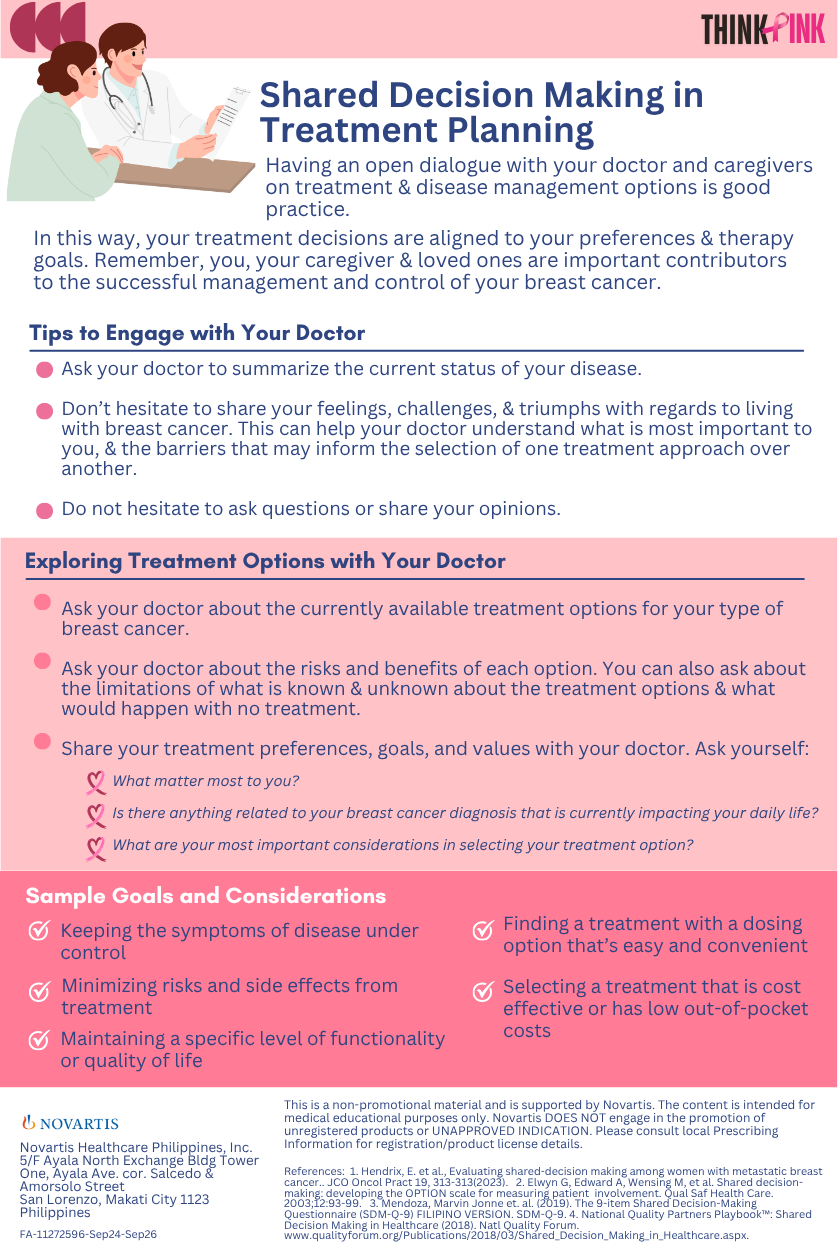
Whether you are newly diagnosed or have already completed treatment, you will face decisions about your care. These decisions are made together with your healthcare team and are based on medical factors, your personal situation, and your preferences.
There is no one-size-fits-all plan. What is right for one person may be different for another.
What Happens After Breast Cancer Treatment?
Follow-up care helps monitor recovery, manage side effects, and check for recurrence or new cancer.8,9
Many people benefit from a survivorship care plan that outlines next steps and monitoring.8,9
It is important to report any new, persistent, or unusual symptoms to your doctor so they can be properly assessed. Make sure to take note of:5,8
- New lumps
- Swelling
- Pain
- Skin changes
Your doctor may schedule follow-up visits based on your cancer type, treatment, and overall health.8,9
European Society for Medical Oncology (ESMO) guidelines recommend visits every 3–4 months in the first 2 years, followed by less frequent visits over time based on individual needs.10
Visits may include examination and tests such as bloodwork and imaging.8
Life after treatment may bring uncertainty or fear.7
These feelings are common and you are not alone. Always know that talking to someone you trust, like your doctor, support groups, or loved ones, can help.7